


For more articles, videos, books, and resources about faith and art, visit RabbitRoom.com.
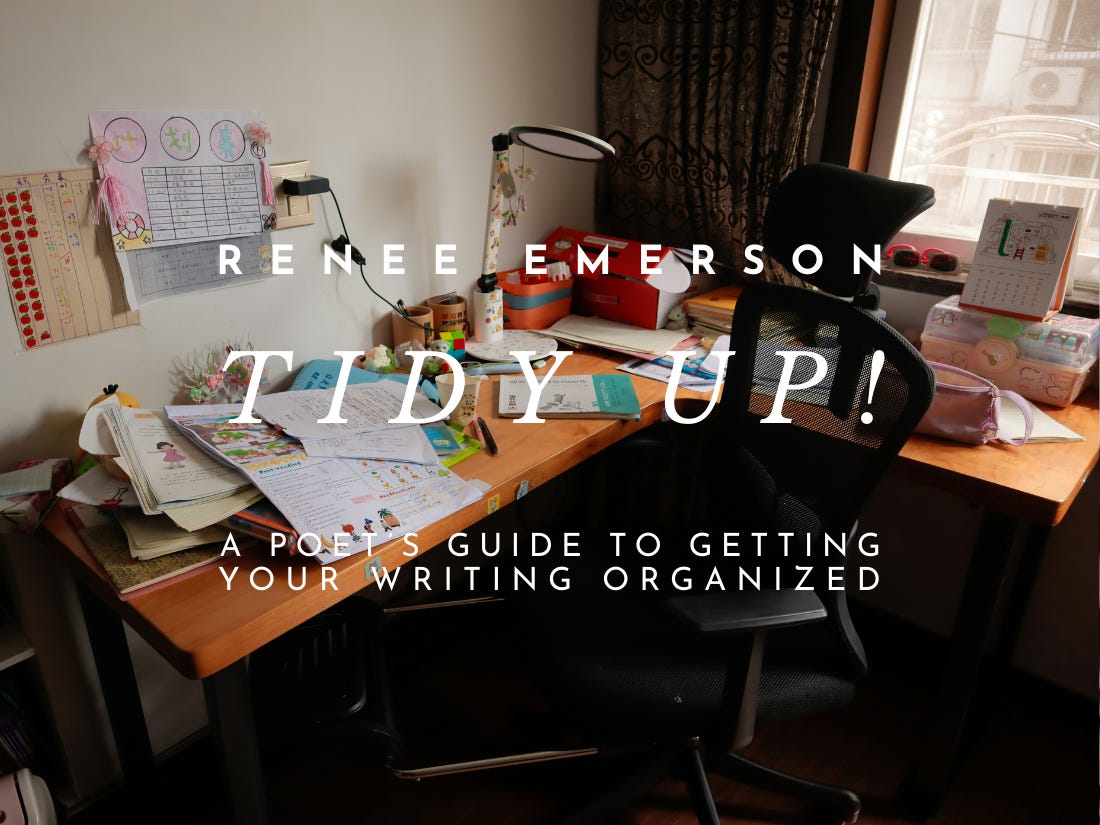
by Renee Emerson
Perhaps, like me, you have come across this situation. On a favorite poetry forum, a friend has shared a top literary magazine’s advertisement: “Fancy Literary Magazine - Themed Call for Submissions: Poems about Monsters and Mythical Creatures. Deadline: too near to write anything new.”
Free to submit, pays more than $0. I feel a thrill of excitement as I scan through the guidelines. Best yet, the perfect poem for this call rises to my mind like a lotus flower in a fishpond: my weird “Self-Portrait as the Loch Ness Monster” sestina that I have never shown to anyone, but that I know, deep down, is true gold!
But, did I save my tribute to Nessie in my email or on my phone? Or maybe it was in Google Docs? I’ll just check my past emails to my poetry critique group. Surely I sent it to them last April, but I guess that wouldn’t be the most recent version. Oh well, it's time to cook dinner, and it is taco night! Maybe I will get to this tomorrow.
Guess whose poem was not in by the deadline?
Have you ever found yourself in this situation? Excitedly making note of an upcoming publishing opportunity, beginning to hope and dream of seeing your name in print, only to find that your work is not revised and ready, or, worse yet, you have no idea where it is?
A writer can not win a contest they do not submit to or publish in a magazine that never receives their work.
One crucial step to becoming a published writer is organization. No matter how wonderful the crown of sonnets you wrote last night is, if it has slipped behind your desk or become one of the billions of icons freckling your computer screen, no one is going to read it.
This is a hard truth. Perhaps you are naturally an organized person, and the title of this essay makes your cataloged little heart leap with glee. Or, perhaps you can barely see your desk beneath the stacks of books, coffee cups, and your kid’s Legos. So why take the time to get organized—shouldn't writers always put their writing first?
Here’s why a writer needs to be organized:
Keeping Track of Submissions
A writer needs to be able to easily keep track of which poems/stories/essays have already been accepted for publication and which ones are still available. Most journals do not accept work that has been previously published. If they do allow it, they require notification that the piece is a reprint so they can properly attribute credit to the original publisher. Keeping track of your work is important to your integrity as a writer.
Keeping Track of Writing Progress
Being organized keeps a writer’s fingers on the pulse of their writing. For example, a writer could organize their computer files by what needs revision, what is upper-tier, what is lower-tier, or what is abandoned. Knowing where to access the best poems quickly will make it easier when that fabulous magazine opens up free submissions for approximately three blinks of an eye.
Keeping Momentum
When your collection of work is a crumpled pile of papers on your desk or a haphazard list of files on a computer, it can get overwhelming. How do you start a new poem when there are just so many running wild? There is an emotional tax to being a disorganized writer—it can slow down your writing because you aren't clear where you are going or where you have been. Treat your work with the respect you would want a publisher or editor to give it—and that would include a decent file name and, at the very least, not losing it.
But how does a writer get organized? Do you hold each poem in your hand and see which one brings you joy? Alphabetize? Use the Dewey Decimal system?
Welcome to the life-giving magic of becoming an organized writer:
1. Organize the digital files
Organizing writing digitally is the most practical way in the age of email submissions and free online submission managers such as Submittable or Duotrope. The vast majority of literary magazines and publishers will require a digital copy of a writing submission, rather than a paper copy. It is also more economical when one thinks of all the printing that must be done to keep up with multiple revisions of poems, stories, or novels.
I recommend keeping folders within folders for organizing writing digitally. The main folders I have for my writing are prose and poetry. From there, poetry breaks down into various categories.
My current poetry folder breakdown looks something like this:
Poetry
Poems to edit and submit
Upper tier
Lower tier
Recently Submitted
Published poems not in a book
Poetry Manuscript in Progress
Abandoned Drafts
I did not begin dividing my poems by tier until this past year; I used to think, “I love all my babies equally!” But I realized that part of being able to revise necessitates being able to look at a piece of writing in a detached, critical way.
Now, when I read through my writing, an upper tier and lower tier emerge since some poems, though perfectly fine, are just less complex and challenging than others. Having my writing divided by tiers helps me decide more quickly on what poems I would send to a contest or literary journal.
In addition to tiers, I also have folders for poems recently submitted that I am waiting to hear back on, so that I don’t send those poems out too frequently and have to go through the hassle of withdrawing them from a hundred other journals. Most literary magazines allow writers to send their work out to multiple magazines at a time, as long as they receive an email withdrawal when the piece is accepted elsewhere. I also keep a folder for poems that have been published, a folder for poems that need revising, and a folder for abandoned drafts.
How many subfolders you have within your writing folder will depend largely on what genres you write in and how particular you are. I find that it is easier for me to have many subfolders, and sometimes, if I find a theme emerging, even add a thematic subfolder to my upper-tier or lower-tier poem folders, like the lonely trio of poems I have about the movie You’ve Got Mail.
2. Organize paper copies.
The majority of my finished poems live in digital form, since typing up a poem is my final step in revising it. But I am a promoter of having a tangible copy of a piece when working toward a manuscript. These could be kept in manila folders, files, paper-clipped. Some writers keep all the versions of a poem stapled together. Maybe take a stroll down the office supplies aisle and see what speaks to you.
3. Back up everything!
But I am an artist, you say. This “organization” stuff, this “tidiness,” is for other people, like high school math teachers or governesses in novels.
How artistic do you feel, though, when your overweight cat Sassafras exerts herself to leap onto your desk, spilling coffee all over your computer? Or, for those who disdain technology, she pounces, and the coffee drenches your only typed copy of your manuscript?
Keeping your writing organized is not only about submitting it for publication but is also about preserving it. I recommend several methods of backup to cover all the bases. First, have a primary place to keep your writing. I use a jump drive, since I am old and my laptop is not all that reliable.
Then have a secondary, completely unrelated place that you keep your writing. I email a zipped file of my writing to myself every month or so. When I’m working on a novel, I email it to myself whenever I revise heavily or write a new chapter. If you use Google Docs, it updates as you write. How frequently you choose to back up your writing will depend on how paranoid you are of losing it.
Quick Start Tips:
If you want to get organized and don't know where to start, I recommend spending a day simply tracking all your poems down. Gathering all the poems in the notebook, on your phone, in your email, on your laptop, and putting them all in one place. You can get more organized from there later, but simply making sure you have access to your work is a big step in the right direction.
How much more likely are you to edit, revise, submit, or compile a manuscript if you know where all of your poems are?
A few other baby steps to organization may be:
Start a spreadsheet to track submissions
Start a uniform labeling system for revision drafts (i.e., “poem title_version3”)
Type up poem drafts written on scrap paper or in a notebook
But be patient with yourself. A system doesn't have to happen overnight, but can happen with little steps in the right direction. As the poet Seamus Heaney once said, “Getting started, keeping going, getting started again—in art and in life, it seems to me this is the essential rhythm.” Just get started and see where it leads you.
I hope these tips can help you get your writing in all the places it should be and out from under the couch!
Renee Emerson is a poet and homeschooling mom of five who can usually be found at the library, on a nature walk, or reading Tolstoy. Her most recent collection of poetry is Church Ladies (Fernwood Press 2023). You can read more of her work at her Substack: Renee’s Book Bag.

For more resources on art and faith, sign up for our other newsletters: Poetry, Music, and Articles.
To support the work of the Rabbit Room, join us by becoming a member. Your membership helps fund everything from publishing new books to new podcasts, events, poetry, articles, theatre productions, conferences, and more. Membership is vital to our flourishing, and we’d love for you to participate. Click here to join or learn more.
Thank you, because, help me Jesus, I need some writing organization. LOL.
Interesting article Renee and some useful suggestions.
I use mind mapping software to keep track of my poems.
https://freemind.sourceforge.io/wiki/index.php/Main_Page
It gives me a graphical log of what I've written, what version I've got to and links to the files stored on my hard drive. One click (most of the time) and word opens with the latest version of the poem displayed.
To keep track of submissions I use a spreadsheet.